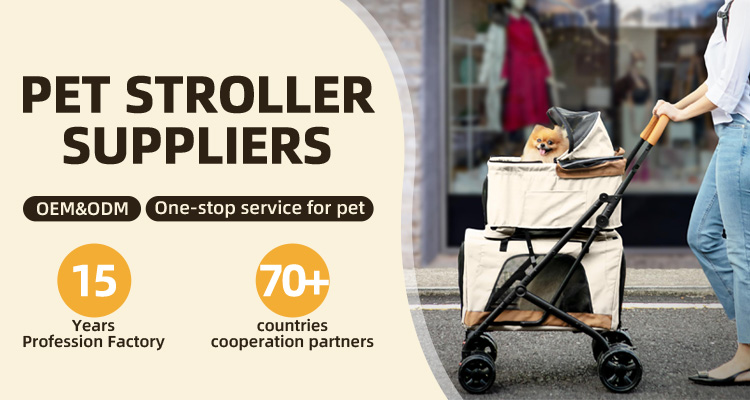
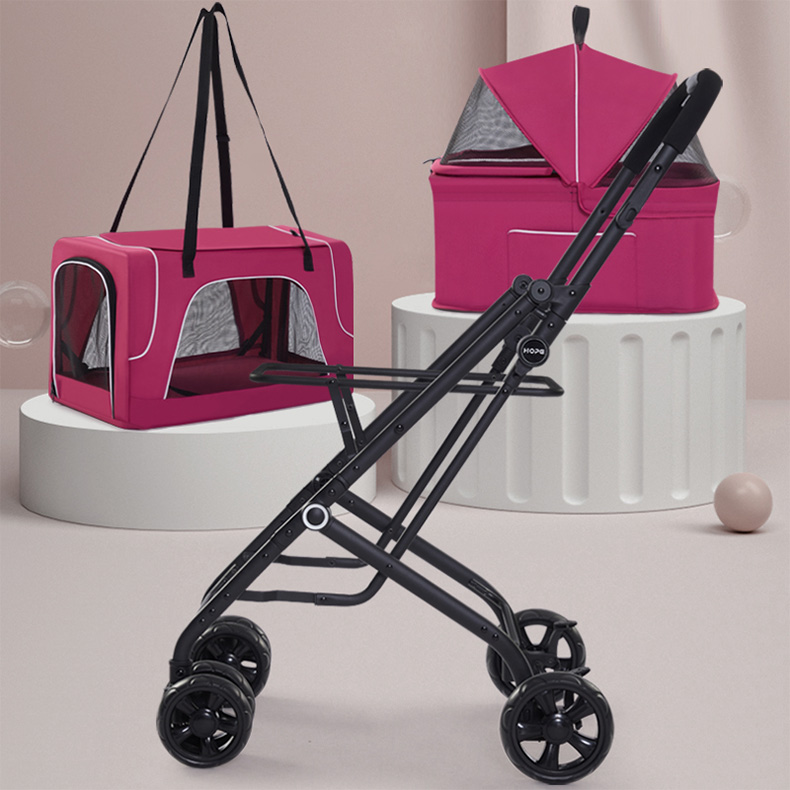
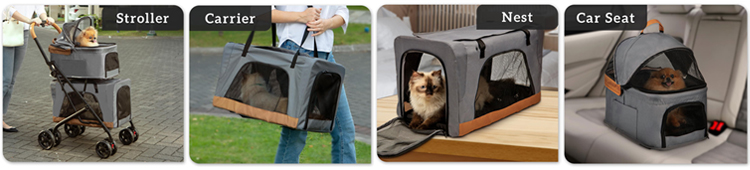
Both baby strollers and pet strollers are designed for convenient travel. Baby strollers are mainly used to help parents carry their babies out, providing a comfortable and safe resting space, suitable for daily walks, shopping and other occasions. Pet strollers are designed specifically for pets, especially for elderly dogs, injured or disabled pets. They provide a safe and comfortable space for pets to avoid excessive exercise or injury, and are suitable for walking, traveling or medical treatment. Although the two have similar functions, their designs take into account different usage needs and safety standards.
Although baby strollers and pet strollers have different uses, they also have significant differences in design. So, what are the differences between strollers and pet strollers?
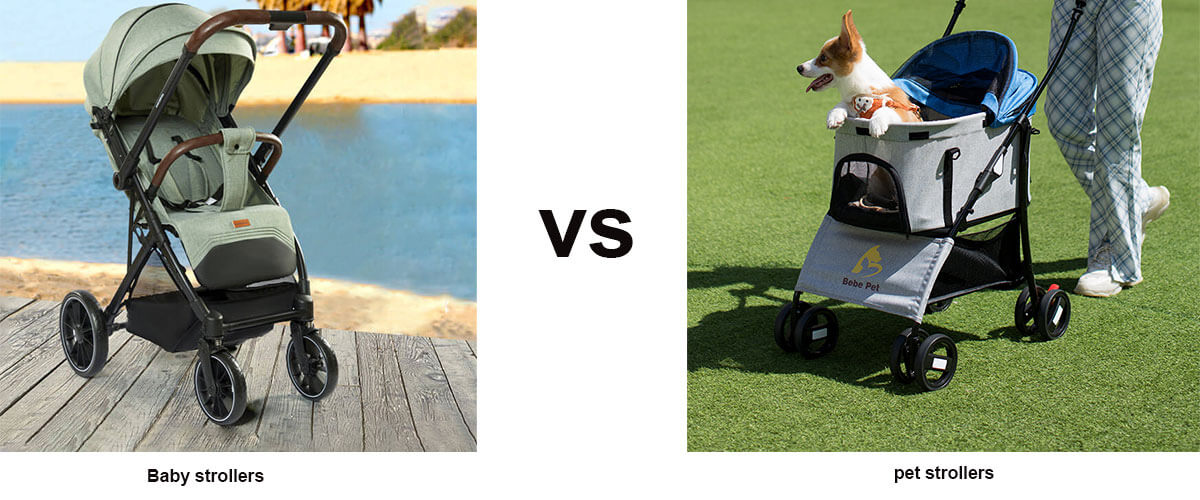
This article will discuss the feasibility, advantages and disadvantages of using a stroller as a pet stroller, and what you need to pay attention to.
The design difference between strollers and pet strollers
Security design
Baby stroller: The safety design of the stroller mainly focuses on the safety needs of the baby, including a five-point safety belt, an adjustable seat, a stable braking system, and a sunshade, etc., to ensure that the baby will not slip or be affected by external forces during movement. environmental interference.
Pet Strollers: Pet stroller focus on preventing pets from escaping or being stimulated by the outside world, so they are usually equipped with special pet safety belts and protective nets. The design of pet strollers also often adopts a mesh structure to maintain good breathability, ensuring that pets can enjoy the outside view while avoiding jumping out or being injured.
Comfort and space
Baby stroller: The stroller seat is designed to be more comfortable and suitable for babies to rest for a long time. The seat usually has an adjustable angle and can be adjusted to a lying position. The seat is padded to provide a more comfortable resting experience for babies.
Pet Strollers: The cabin of a pet car is usually spacious and suitable for pet activities. They focus on the comfort and activity space of pets. Especially for larger pets, the size and design of the carriage may be more flexible to adapt to the different needs of pets.
Structure and durability
Baby stroller: The structural design of a stroller is relatively refined, mainly considering portability and convenience. The body is usually made of lightweight materials for easy implementation. Although strollers are solidly built, they don’t place a heavy emphasis on carrying large or heavy objects.
Pet Strollers: The structure of a pet cart is more solid and durable. The weight, mobility and durability of the pet are usually taken into consideration when designing. Especially for medium and large pets, the body needs to have stronger load-bearing capacity.
Breathability and sun protection design
Baby stroller: Strollers often come with a sun canopy to protect the baby from direct sunlight while maintaining a comfortable shaded environment. The breathability design is relatively average to ensure baby's comfort.
Pet Strollers: Pet cars pay more attention to the breathability of the car, usually using mesh fabrics to ensure that pets can get enough air circulation in the car. Especially in hot weather or when you're outside for long periods of time, good breathability helps prevent your pet from overheating.
Appearance design
Baby stroller: The appearance design of strollers is usually more modern and simple, and the color and style are more in line with the aesthetic needs of parents, focusing on the safety and comfort of the baby.
Pet Strollers: The exterior design of pet carts takes more into account the behavioral characteristics and comfort needs of pets. The style may pay more attention to functionality and practicality, with various colors and design styles to meet the needs of different pets and pet owners.
Generally speaking, although the designs of strollers and pet strollers are similar, their design concepts, structures and details are optimized differently for different use needs. Strollers focus more on the baby's comfort and safety, while pet strollers focus more on the pet's activity space, ventilation and protection.
Advantages of strollers as pet strollers
1. Convenience and Versatility
One of the biggest advantages of using a stroller as a pet stroller is its versatility. Many strollers are designed to be simple and lightweight, making them ideal for short trips or trips. For owners who don’t go out often or who occasionally take their pets out, using a stroller instead of buying a specialized pet stroller can save money and storage space.
2. Comfortable seat design
Stroller seats are usually designed to be comfortable, with padding and adjustable angles for your pet to rest on while out and about. This kind of comfort is especially suitable for elderly dogs or pets with limited mobility, allowing them to get sufficient rest when going out and avoid excessive fatigue.
3. Better sunshade and windproof function
Strollers are usually equipped with a sunshade, which can effectively prevent direct sunlight from strong sunlight and protect the baby from ultraviolet damage. This feature is also suitable for protecting pets when using the stroller as a pet stroller, especially in high summer temperatures or in outdoor environments. It can provide shade for pets to avoid heat stroke or excessive exposure to the sun.
4. Easy to operate and control
Strollers are usually designed to be lightweight and easy to maneuver, allowing the owner to push them around easily. This is an advantage for pet owners, especially when pets need to move frequently or go out for long periods of time. The stroller is designed to be easy to maneuver and reduce the physical burden.
5. Large capacity storage space
Strollers are often equipped with a large-capacity lower basket, suitable for storing pet food, water, toys and other necessities. This extra storage space is very practical for owners who take their pets out, making it easy to carry the items they need without having to scramble.
6. Suitable for small pets
Strollers are especially suitable for small pets, such as small dogs, cats, etc. These pets are usually smaller and easily adapt to the space design of the stroller, allowing them to enjoy the view of the outside world while avoiding excessive fatigue.
7. Suitable for occasional owners
For owners who occasionally take their pets out with them, strollers offer a convenient, cost-effective alternative. Rather than purchasing a dedicated stroller, using an existing stroller can provide more flexibility for temporary outings, especially if your pet doesn't need a stroller every day.
Generally speaking, the advantages of strollers as pet strollers are mainly reflected in convenience, comfort, storage space, etc., and are especially suitable for small pets, elderly pets, or owners who occasionally need to push their pets out.
Disadvantages and Challenges of Strollers as Pet Carts
1. Security issues
Strollers are designed primarily to protect babies and lack safety measures specifically designed for pets. Strollers often do not have seat belts or guards for pets, which may make it unsafe for pets in the vehicle, especially lively or restless pets that may try to jump out or break free. Failure to take appropriate precautions may increase the risk of injury to your pet.
2. Not enough space
Stroller seats are usually designed to accommodate the size of the baby, rather than taking into account the pet's activity space like a pet stroller. Some pets, especially medium or large dogs, may find the space too small, limiting their movement and comfort. For pets who need more room to move around, a stroller may not meet their needs.
3. Poor breathability
Strollers usually don't have the same emphasis on ventilation as pet strollers. Although there is a sunshade, the breathability of strollers is usually not as good as the mesh structure of pet strollers, especially in hot weather, which may cause the temperature inside the vehicle to be too high or the air to not circulate, increasing the risk of heat stroke or discomfort for pets.
4. Not suitable for large pets
The weight-bearing design of strollers is generally not suitable for large or heavy pets. Large dogs or pets may exceed the weight limit of the stroller, causing instability or damage to the stroller. Even if a stroller can accommodate a larger pet, the structure and stability of the stroller may not keep your pet safe, especially while moving.
5. Limit pets’ activities and social interactions
The enclosed design and restricted space of a stroller can be detrimental to your pet's natural behaviors. Pets, especially dogs, often enjoy being outdoors, sniffing, and interacting with other animals. The enclosed space of a stroller may limit your pet's opportunities to explore and socialize, affecting their physical and mental health.
6. Not adaptable to complex environments
The wheels and suspension system of strollers are designed more for flat urban roads or sidewalks, while pet strollers are usually designed to be more sturdy and adaptable to various complex terrains. When using a stroller, especially on rough surfaces or uneven streets, it may feel unstable or uncomfortable, interfering with your pet's experience.
7. Lack of specially designed features
Strollers don’t have special features with pets in mind, such as insect screens, rain covers, or adjustable cabin temperature control. These features are specially designed for pet carts to better take care of the special needs of pets. The lack of these details in a stroller can cause discomfort for your pet in certain weather conditions.
Generally speaking, the shortcomings and challenges of strollers as pet strollers mainly focus on safety, comfort, space, breathability and adaptability. Although the stroller can be used as a temporary replacement tool, it is not a tool specially designed for pets, and long-term use may not meet the needs of pets and may even bring potential risks.
Notes on using a stroller as a pet stroller
1. Check Security
Before using a stroller as a pet carrier, first make sure your pet can sit safely in the stroller. Strollers often don't have safety harnesses or nets designed for pets, so extra safety measures are needed. For example, you can use a pet safety belt or harness to secure your pet to prevent them from jumping out or getting injured during the stroller.
2. Assess your pet’s size and comfort
The cabin space of a stroller is usually designed for babies and may not be suitable for all pets, especially larger pets. Make sure your pet has enough space to sit or lie down comfortably. If your pet feels too crowded, it may feel uneasy or uncomfortable, affecting the outing experience. For large pets, a stroller may not be suitable, so evaluate your pet's size and comfort.
3. Check load-bearing capacity
Strollers are designed primarily to carry the weight of a baby and are not suitable for carrying overweight pets. Before using the stroller, be sure to confirm whether the pet's weight is within the weight range of the stroller. If the pet exceeds the weight limit, the stroller may lose its stability, causing it to tip over or be damaged, or even be dangerous to the pet.
4. Improve breathability
Strollers are often not designed with breathability in mind for pets, which may cause the interior temperature to get too high, especially when used on hot days. Consider using additional mesh or curtains to improve breathability and help your pet stay cool and comfortable. Also, check your pet's status regularly to make sure they are not feeling overheated or uncomfortable.
5. Avoid prolonged use
Although strollers are suitable for short outings, they are not suitable for long-term use. Especially for older or convalescent pets, being in a stroller for long periods of time may cause discomfort or muscle stiffness. It is best to avoid leaving pets in strollers for long periods of time and let them come out for some exercise when appropriate.
6. Adapt to your pet’s needs
Not all pets will get used to strollers. Some pets in particular may feel uneasy or anxious, especially when they are put in a stroller for the first time. You can first allow pets to adapt to the stroller at home for a short period of time, and gradually increase the time they spend outside to help them reduce their anxiety.
7. Avoid crowded or noisy environments
Strollers are designed with the baby's comfort and safety in mind, not the pet's behavioral characteristics in the external environment. If you take your pet out, avoid crowded or noisy places to prevent your pet from becoming anxious or frightened. Try to choose quiet, less crowded areas for your walks.
8. Check wheels and brake system
Stroller wheels and braking systems are usually designed for smooth roads. When using a stroller as a pet carrier, make sure the brake system is intact and secures the wheels to prevent the stroller from sliding when parked. If used on uneven roads or slopes, ensure the stability of the wheels.
9. Adapt to seasonal changes
In cold weather, it is necessary to provide extra warmth for pets when using a stroller, such as covering them with blankets. During the hot summer months, make sure the stroller has adequate ventilation to prevent your pet from heatstroke. Add a removable canopy to the stroller or use a dedicated pet sleeping mat for added comfort.
Through the above precautions, using a stroller as a pet stroller can provide a temporary comfortable and safe environment for pets to go out. However, for long-term use, it is recommended to choose a pet stroller specially designed for pets to better meet the needs and safety requirements of pets.
Pet strollers can be used as pet strollers in some situations, but safety, comfort and suitability need to be considered. If your pet goes out frequently, it is best to choose a specialized pet car to ensure the safety and comfort of your pet.